
Psoriasis vs Dandruff: Understanding the Difference
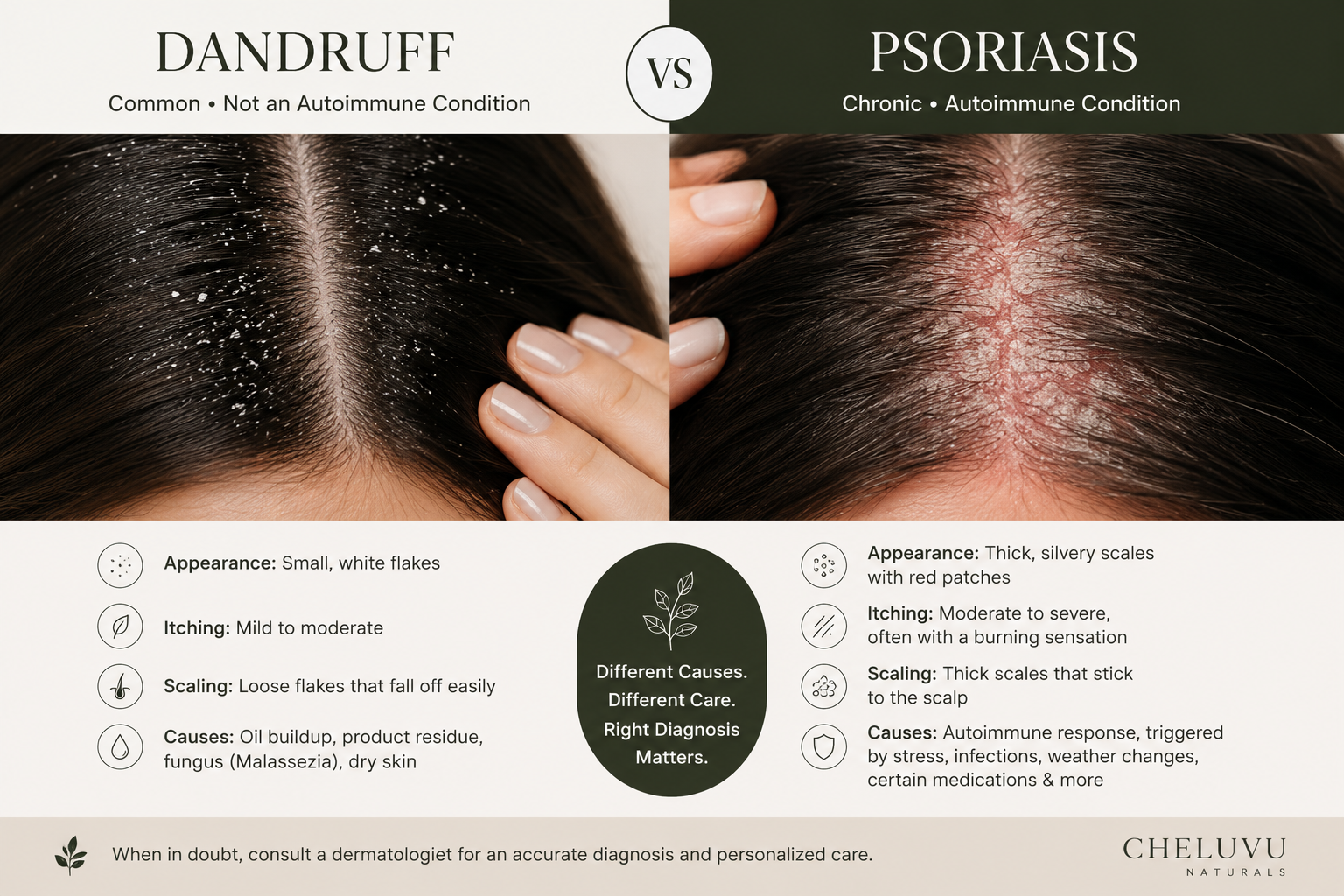
Psoriasis vs Dandruff: Understanding the Difference
Discover the key differences between scalp psoriasis and dandruff, learn what causes each condition, and explore gentle scalp care practices that support overall scalp comfort and wellbeing.
Flakes on the scalp are often automatically dismissed as dandruff. However, not all scalp flaking is the same. Conditions such as scalp psoriasis can closely resemble dandruff, making it difficult to distinguish between the two without proper understanding. While both conditions can cause itching, irritation, and visible flakes, their underlying causes and management approaches are quite different.
Understanding the difference between scalp psoriasis and dandruff is important because treating the wrong condition may lead to ongoing discomfort and frustration.
Why Are Scalp Conditions Often Confused?
The scalp is sensitive and can react to various internal and external factors. When symptoms such as flaking, redness, and itching appear, many people assume dandruff is the cause. However, scalp psoriasis can present similar symptoms, especially in its early stages.
Because both conditions affect the scalp's appearance and comfort, distinguishing between them often requires careful observation and, in some cases, professional evaluation.
What Is Scalp Psoriasis?
Scalp psoriasis is a chronic autoimmune condition that causes skin cells to multiply more rapidly than normal. This accelerated skin turnover leads to the formation of thick, raised patches covered with silvery-white scales.
The condition may affect a small area of the scalp or extend across larger regions. In some individuals, psoriasis may also appear on the forehead, behind the ears, or along the hairline.
Scalp psoriasis is not contagious, and its severity can vary significantly from person to person. Some individuals experience mild flaking, while others may develop more extensive plaques and irritation.
What Is Dandruff?
Dandruff is a common scalp condition characterized by the shedding of small flakes of skin. It is often associated with excess oil production, sensitivity to naturally occurring scalp microorganisms, or irritation from hair care products.
Unlike psoriasis, dandruff is not considered an autoimmune condition. It is generally less severe and often responds well to appropriate scalp care routines and specialized shampoos.
While dandruff can be persistent, it typically does not cause the thick plaques commonly seen in scalp psoriasis.
Key Differences Between Psoriasis and Dandruff
Although the two conditions may appear similar at first glance, several important differences can help identify them.
Appearance
Dandruff usually appears as small white or yellow flakes that shed from the scalp.
Scalp psoriasis often presents as thicker, well-defined patches covered with silvery scales. The skin beneath may appear red or inflamed.
Itching
Both conditions can cause itching, but psoriasis-related itching is often more intense and may be accompanied by discomfort or a burning sensation.
Scaling
Dandruff flakes tend to be loose and easily fall away.
Psoriasis scales are often thicker and may adhere firmly to the scalp before shedding.
Causes
Dandruff is commonly linked to scalp oil production, irritation, or microbial imbalance.
Psoriasis is an autoimmune condition involving the immune system and abnormal skin cell growth.
Common Triggers for Scalp Psoriasis
While the exact cause of psoriasis remains unclear, several factors are known to trigger or worsen flare-ups.
Stress
Emotional stress is frequently associated with psoriasis flare-ups and may contribute to increased symptom severity.
Weather Changes
Cold, dry weather can worsen scalp dryness and irritation, making psoriasis symptoms more noticeable.
Infections
Certain infections may trigger psoriasis episodes in susceptible individuals by activating immune system responses.
Other potential triggers may include skin injuries, certain medications, smoking, and lifestyle factors.
Managing Scalp Psoriasis
Managing scalp psoriasis often involves a combination of medical treatment and supportive scalp care. Dermatologists may recommend medicated shampoos, topical treatments, or other therapies depending on the severity of symptoms.
Consistency is important, as scalp psoriasis is typically a long-term condition that may experience periods of improvement and flare-ups.
Why Harsh Shampoos Can Worsen Irritation
Many people experiencing scalp discomfort are tempted to use stronger cleansing products in an attempt to remove flakes quickly. However, harsh shampoos containing aggressive detergents, strong fragrances, or drying ingredients may further irritate an already sensitive scalp.
Over-cleansing can disrupt the scalp's natural balance, potentially increasing dryness, discomfort, and irritation.
Choosing gentle formulations designed to cleanse without stripping the scalp can be beneficial for maintaining overall scalp comfort.
Natural Scalp Care Tips
Supporting scalp health starts with adopting a gentle and mindful hair care routine.
Helpful practices may include:
• Using mild, non-irritating cleansers
• Avoiding excessive heat styling
• Keeping the scalp moisturized when appropriate
• Managing stress through healthy lifestyle habits
• Protecting the scalp from extreme weather conditions
While natural hair care products cannot treat psoriasis, they may help support a healthier scalp environment and improve overall comfort.
Cheluvu's Approach to Gentle Scalp Care
At Cheluvu Naturals, we believe that effective scalp care should nurture rather than overwhelm. Our philosophy focuses on plant-based ingredients selected for their gentle nature and compatibility with daily scalp care routines.
Botanical ingredients such as black seed oil, hibiscus, and other nourishing extracts have been traditionally valued for supporting scalp wellness while helping maintain moisture and comfort. Choosing mild, vegan, and cruelty-free formulations can be especially important for individuals seeking a more balanced approach to hair and scalp care.
If you experience persistent flaking, redness, itching, or scalp discomfort, consulting a dermatologist is essential for obtaining an accurate diagnosis. Understanding the root cause of your symptoms is the first step toward finding the right management approach.
Because a healthy scalp begins with awareness—and informed care makes all the difference.
✨ Explore Cheluvu Naturals' collection of gentle, vegan, and cruelty-free hair care designed to support healthy scalp and hair wellness through the power of nature.
#PsoriasisScalp #ScalpPsoriasis #DandruffVsPsoriasis #ScalpHealth #HairCareEducation #NaturalHairCare #CheluvuNaturals