
Seborrheic Dermatitis: More Than Just Dandruff
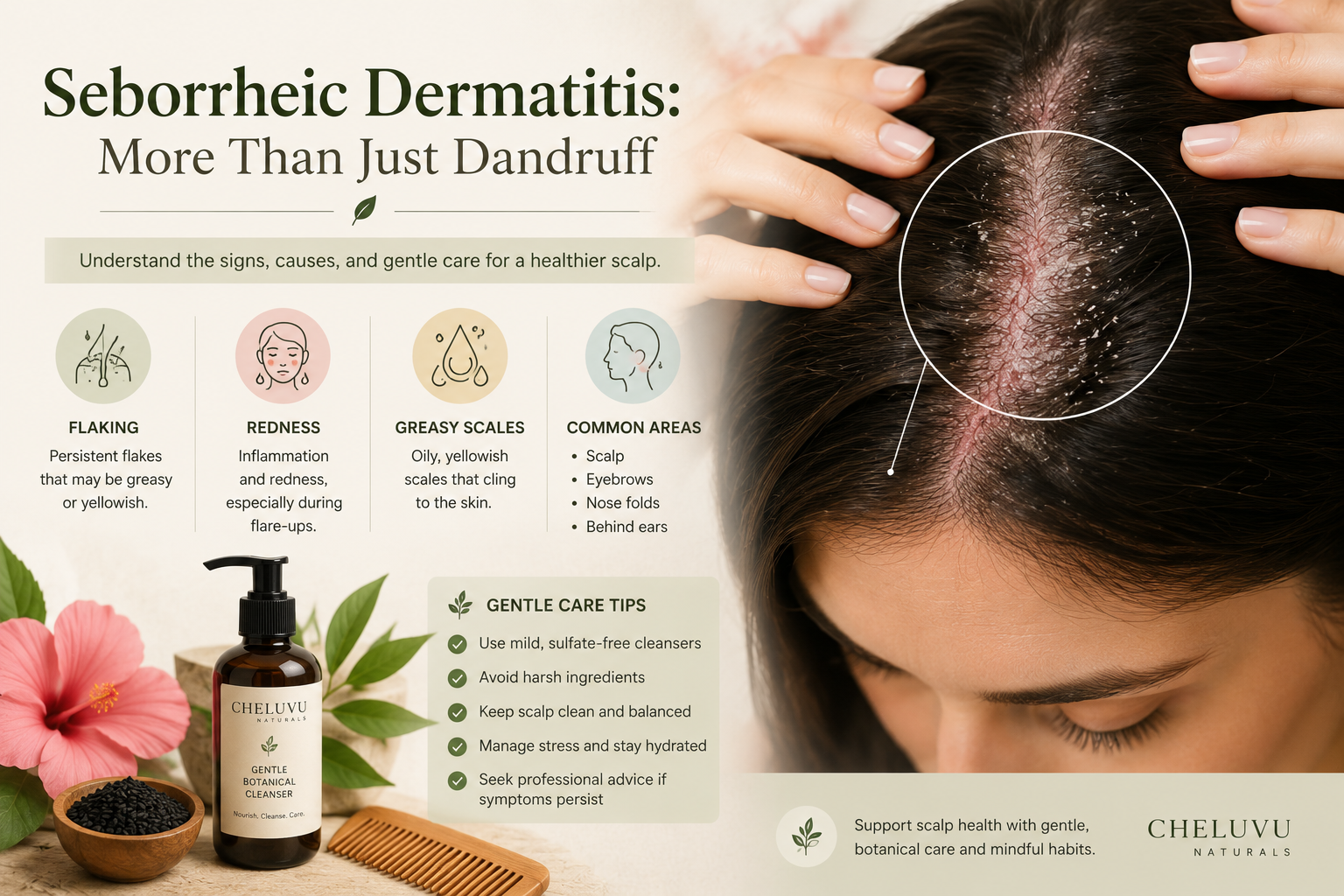
Seborrheic Dermatitis: More Than Just Dandruff
Learn what seborrheic dermatitis is, how it differs from ordinary dandruff, and discover gentle scalp care practices that can help support scalp comfort and overall scalp health.
Many people notice flakes on their scalp and assume they are dealing with dandruff. While dandruff is common, persistent flaking accompanied by redness, irritation, or greasy scales may indicate a different condition known as seborrheic dermatitis.
Although often mistaken for severe dandruff, seborrheic dermatitis is a chronic inflammatory skin condition that affects areas of the body rich in oil-producing glands. Understanding the condition can help individuals make informed decisions about scalp care and know when professional advice may be needed.
What Is Seborrheic Dermatitis?
Seborrheic dermatitis is a common skin condition that causes inflammation, flaking, and irritation. It most commonly affects the scalp but can also appear in other oil-rich areas of the body.
The condition is not contagious and is not caused by poor hygiene. Researchers believe it may result from a combination of excess oil production, individual sensitivity, and naturally occurring microorganisms that live on the skin.
Like many chronic skin conditions, seborrheic dermatitis often comes and goes, with periods of improvement followed by flare-ups.
Common Signs and Symptoms
Symptoms can vary from person to person, but several signs are commonly associated with seborrheic dermatitis.
Flaking
Persistent scalp flakes are often the first symptom people notice. These flakes may be larger and more noticeable than those typically seen with dandruff.
Redness
Affected areas may appear red, irritated, or inflamed, particularly during flare-ups.
Greasy Scales
Unlike ordinary dandruff, seborrheic dermatitis often produces oily or greasy scales that cling to the skin rather than falling away easily.
Some individuals may also experience itching, tenderness, or scalp discomfort.
Areas Commonly Affected
While the scalp is the most common location, seborrheic dermatitis can affect several areas of the body.
These include:
• The scalp
• Eyebrows
• Sides of the nose
• Behind the ears
• Hairline
Because these areas contain more oil-producing glands, they are more prone to developing symptoms.
Causes and Contributing Factors
The exact cause of seborrheic dermatitis is not fully understood, but several factors are believed to contribute to its development.
Common contributing factors include:
• Increased oil production
• Sensitivity to naturally occurring skin microorganisms
• Emotional stress
• Hormonal changes
• Cold or dry weather
• A weakened immune response
Triggers vary between individuals, and understanding personal triggers can often help improve symptom management.
How Is It Different From Ordinary Dandruff?
Although the two conditions share similarities, seborrheic dermatitis is generally more complex than dandruff.
Dandruff typically causes small, loose flakes without significant redness or inflammation. Seborrheic dermatitis often involves redness, itching, irritation, and greasy scales that adhere to the skin.
Another key difference is that seborrheic dermatitis frequently affects areas beyond the scalp, including the eyebrows and sides of the nose.
Gentle Scalp Care Practices
Maintaining a healthy scalp environment can play an important role in overall scalp comfort.
Helpful habits may include:
• Cleansing regularly with gentle shampoos
• Avoiding harsh detergents and strong fragrances
• Limiting excessive heat styling
• Managing stress levels
• Following a consistent scalp care routine
Over-cleansing or using aggressive products may further irritate sensitive skin and disrupt the scalp's natural balance.
Cheluvu's Approach to Scalp Wellness
At Cheluvu Naturals, we believe healthy hair begins with a healthy scalp. Our approach focuses on gentle botanical care that supports scalp hygiene without unnecessary harshness.
Traditional ingredients such as black seed oil, hibiscus, and other plant-based extracts have long been valued for their nourishing properties and compatibility with everyday scalp care. While natural hair care products are not a treatment for seborrheic dermatitis, choosing mild botanical cleansers may help support scalp comfort and overall wellness.
If you experience persistent flaking, redness, itching, or symptoms that do not improve with routine care, consulting a dermatologist is important for obtaining an accurate diagnosis and personalized treatment recommendations.
Because understanding your scalp is the first step toward caring for it—and healthy scalp habits can make a meaningful difference over time.
✨ Explore Cheluvu Naturals' collection of gentle, vegan, and cruelty-free hair care crafted to support healthy scalp and hair wellness through the power of nature.
#SeborrheicDermatitis #ScalpHealth #ScalpCare #SensitiveScalp #HairCareEducation #NaturalHairCare #CheluvuNaturals